Best Soccer Rebounder for the Backyard: Nets vs Boards, Sizes and Which One Fits Your Space
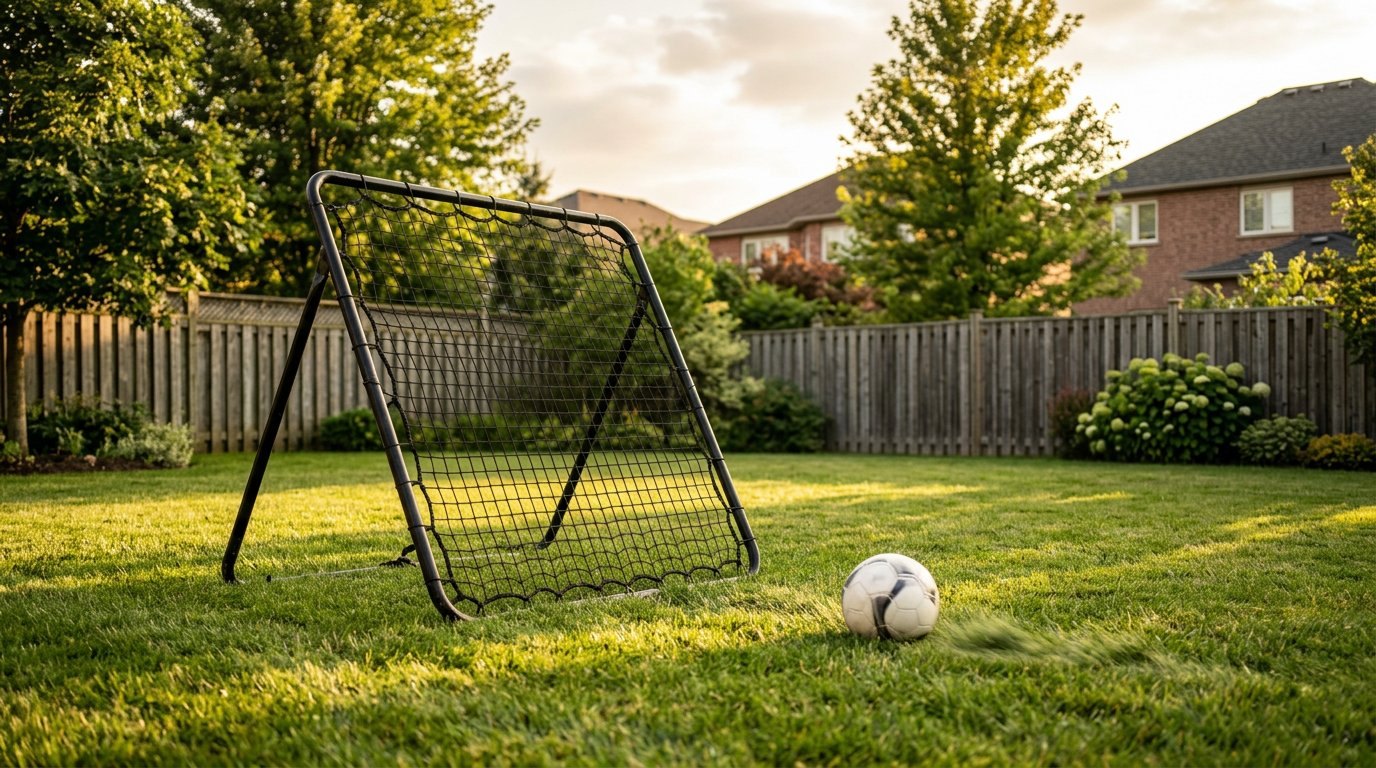
A rebounder turns ten minutes alone in the garden into a hundred first touches. It is the single most useful piece of home training equipment for a young player, and also the one most often bought wrong: too big for the space, too flimsy to survive a size 5 ball, or a type that returns the ball in a way the player cannot use. Here is how the types differ, what size fits a typical yard and which models earn their place.
Net rebounders, boards and walls: three different tools
- Net rebounders (a frame with a tensioned net, often angled) return the ball softly, usually in the air. Best for first touch, volleys and receiving aerial balls. The most common and most affordable type.
- Rebound boards (rigid plastic or wood panel) return a passed ball along the ground at near-full speed. Best for passing accuracy and one-twos; harder, louder, and they ask more of the player's touch.
- Rebound walls and gates (small ground-level frames) are for passing drills; they also work as mini goals.
For a child under twelve, a net rebounder is the right first buy. From twelve upwards, a board adds the passing work a net cannot.
Size and space: what fits a normal yard
| Rebounder size | Space needed | Best for |
|---|---|---|
| 3 x 3 ft to 4 x 4 ft | 15 ft of clear run-up | Under-10s, small gardens, patios |
| 5 x 5 ft to 6 x 4 ft | 20 to 25 ft | Most families; aerial and ground work |
| 7 x 7 ft and larger, double-sided | 30 ft plus | Teenagers, goalkeepers, two players at once |
Measure the yard before you buy. The ball comes back further than you expect, and a rebounder too close to a fence or window gets used once.
What breaks: frames, nets and bungees
Three things fail. Thin steel tubing bends on the first hard strike from a size 5 ball; look for 1.25 in (32 mm) tube or thicker on anything above 4 ft. Nets tear at the bungee loops; replaceable bungees and a net with reinforced edges double the life. Plastic corner joints crack in cold weather; metal joints or one-piece bent frames last longer. Ground stakes are not optional on grass, and sandbags are needed on hard surfaces.
Our picks
Categories, not colourways. Links open current Amazon results so you can check prices and reviews today.
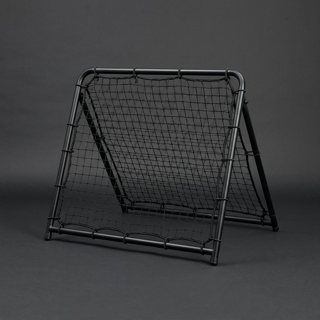
Adjustable-angle net rebounder, about 5 x 5 ft
Angle changes between ground returns and aerial returns; the one most families should buy.
Compact 3 x 3 ft rebounder
Fits a patio, folds flat, enough for under-10s.
Rigid soccer rebound board
Fast, flat ground returns for one-twos and weak-foot passing.
Double-sided rebounder, 6 ft plus
Two surfaces, two players, survives size 5 strikes.
Pop-up rebounder net
Light and cheap; fine for under-8s, not for powerful teenagers.
Ground stakes and sandbags
Stops the frame walking or tipping; the cheapest way to make a rebounder last.
Drills that justify the purchase
Three drills cover most of the benefit. One: two-touch receive and return, alternating feet, sets of twenty. Two: volley return, starting close and stepping back a yard each set. Three: receive on the thigh or chest, control, pass back. Ten minutes a day beats an hour on Saturday.
Can a rebounder be used on concrete?
Yes, with sandbags or weights on the base and a ball with a durable cover. Net rebounders are kinder to the ball than boards on hard ground.
Rebounder or pop-up goal?
A rebounder develops touch; a goal develops shooting. If you can only buy one for a child under twelve, buy the rebounder.
Build the rest of the home setup with our starter kit checklist in the Gear Lab.
Comments
Post a Comment