Soccer Cleats for Wide Feet (Men, Women and Youth): Brands That Fit, Materials That Stretch and Sizing Rules
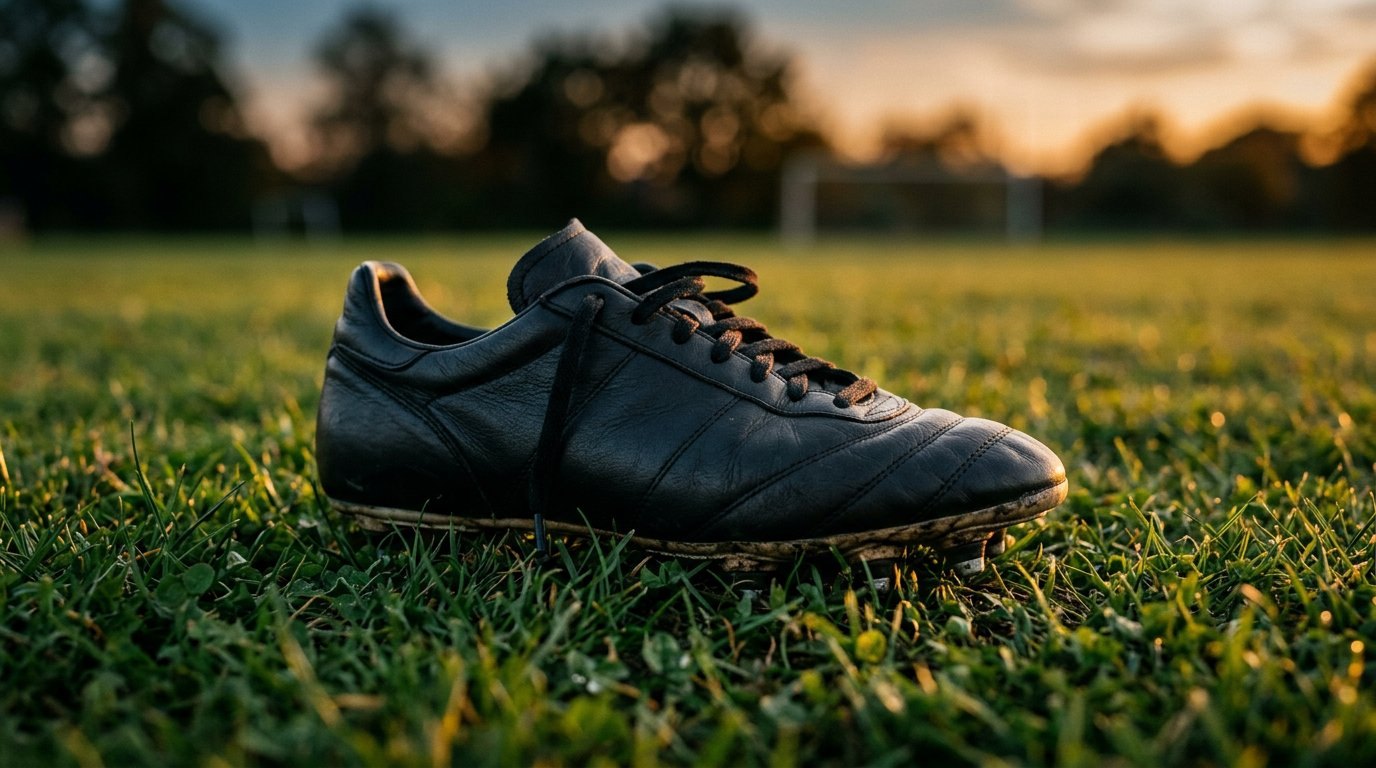
Most soccer boots are built on a narrow last because narrow boots feel fast. Players with wide feet are told to size up, which makes the boot too long and does nothing for the width. There are better answers: lasts cut wider, uppers that stretch, and a fitting method that finds the right boot in a shop or on a returns-friendly order. This guide covers all three, for adults and for children.
Are your feet actually wide?
Stand on paper, trace both feet, measure the widest point. Compare to the length. In adult sizes, a width over 4 in (10.2 cm) at a US men's 9 is wide; over 4.3 in (11 cm) is extra wide. In youth, if the big toe and little toe both press against the upper of a boot that is the correct length, the foot is wide for that last. Many "wide" problems are a high instep instead: the foot does not spread but the top of the boot presses. Those players need a soft upper and a looser lacing pattern, not a wider last.
Materials: what stretches and what does not
- Kangaroo leather stretches about a half size in width within a few sessions and moulds to the foot. The classic answer for wide feet.
- Calf leather stretches less but still gives.
- Soft synthetic leather gives a little; firm synthetics give nothing.
- Knit uppers stretch across the forefoot but offer little hold; good for wide feet that are not also high-volume.
Lasts and widths by brand type
Several major brands sell a "wide" version of their main models, usually one width step (2E) up. Others are known for a roomier standard last. The reliable approach: look for a model that explicitly lists a wide fit, or for a leather boot from a brand with a reputation for a generous forefoot, and buy the measured length, not a longer one.
The fitting method
- Measure length and width at the end of the day, standing.
- Order the measured length in the wide version, and the same length in the standard version of a leather model.
- Try both with match socks. The toes should not touch the end; the sides should not bulge over the sole plate; the heel should not lift.
- Return the loser. Never keep a boot that is too long to get width.
Our picks
Links open current Amazon results in each category.
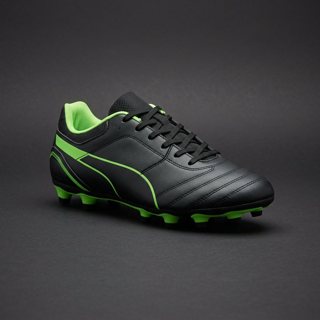
Wide-fit soccer cleats, men’s
Models listed as wide or 2E; the measured length.
Kangaroo leather soccer cleats
Stretches and moulds; the traditional fix for wide feet.
Women’s wide soccer cleats
Wider forefoot without going up in length.
Wide-fit youth soccer cleats
Roomier last for children; see our kids cleats guide for sizing.
Wide-fit turf shoes
For training on artificial turf; turf shoes are often roomier than cleats.
Thin sports insoles
Buys a few millimetres of volume in a boot that is nearly right.
Lacing and insoles that buy room
Skip the eyelets over the pressure point (window lacing) to relieve a high instep. Replace a thick stock insole with a thin one to gain a few millimetres of volume. Neither fixes a boot that is genuinely too narrow at the sole plate.
Should I size up for wide feet?
Half a size at most, and only in a boot that also has a stretchy upper. A full size up leads to a boot that slaps and blisters.
Are wide boots slower?
No. A boot that fits is faster than one that hurts.
New boots mean a break-in; our guide on breaking in cleats without ruining them covers leather and synthetic.
Comments
Post a Comment