Best Goalkeeper Gloves for Kids: What to Buy at 6, 8, 10 and 12, With or Without Finger Protection
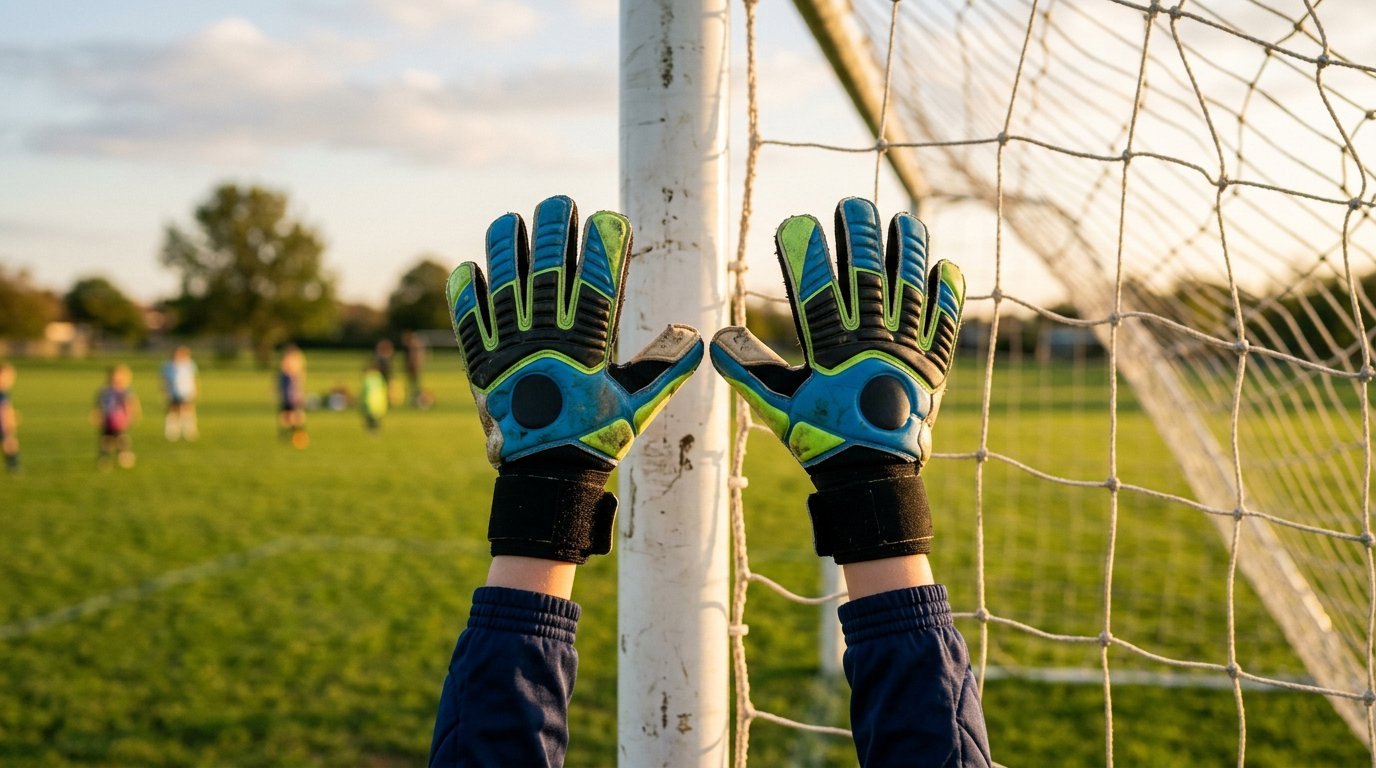
A child who volunteers to go in goal deserves gloves that let them catch. Most junior gloves sold in bulk packs have thin latex, a loose flat cut and no protection, and they teach a six-year-old that the ball hurts. This guide tells you what to buy at each age, when finger protection helps and when it gets in the way, what to expect to pay and how to make a pair last past Christmas.
Sizing in one line
Measure the hand from the base of the palm to the tip of the middle finger and use our size chart; as a shortcut, size 4 at 5 to 6, size 5 at 7 to 8, size 6 at 9 to 10 and size 7 at 11 to 12, with half an inch of latex beyond the fingertip at most.
By age: what changes
- 5 to 7. Soft latex, roll-finger or flat cut, elastic wrist strap the child can fasten alone. Finger protection is optional; many children find the spines stiff and stop wearing the gloves. Comfort wins.
- 8 to 10. This is when a shot starts to sting. Removable finger spines help confidence; buy gloves with spines that come out, so they can be removed when technique improves. Roll-finger cut for the most latex on the ball.
- 11 to 13. Keepers start to specialise. A better latex (a soft "contact" palm) for matches and a durable training pair for turf. Negative cut if the hands are slim.
Finger protection: the honest answer
Spines prevent hyperextension of the fingers when a shot bends them backwards. They do not prevent jammed fingers from a ball hitting the fingertip straight on, which is the more common youth injury. They also reduce feel and make the glove stiffer. Our rule: spines from eight to twelve while the catching technique settles, or after any finger injury; otherwise optional.
Turf, grass and the two-pair rule
On artificial turf, soft latex wears through in weeks. If your child trains on turf more than once a week, buy a cheap durable pair for training and keep the better pair for matches. Rinse both after every use.
Our picks
Links open current Amazon results in each category.
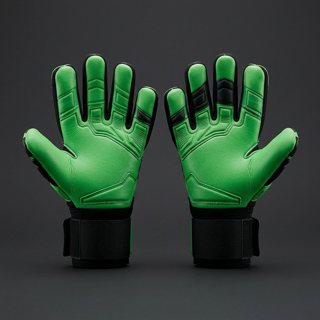
Junior gloves, soft latex, elastic wrist, size 4 to 5
Comfortable, easy to put on, no stiff spines.
Youth gloves with removable finger spines, size 5 to 6
Protection while learning, spines out when confidence arrives.
Youth match gloves, roll-finger, contact latex
Grip in the wet for the keeper who plays every weekend.
Durable training gloves
Dense latex for artificial grass; keeps the match pair fresh.
Entry gloves, any youth size
For rotating keepers and spare pairs.
Glove wash and glove bag
Soft latex, no smell, longer life.
Care that doubles the life of the gloves
Rinse in lukewarm water after each session, squeeze out, dry away from heat with the fingers open. Store flat, palms apart. Dampen the palms before a match for grip. A pair treated this way lasts a season; one left in the bag lasts a month.
Are expensive gloves worth it for a child?
Under ten, no. From eleven, a mid-range match glove makes a visible difference in the wet.
Should my child wear gloves at training if they are not the goalkeeper?
If they rotate into goal, yes; a cheap pair in the bag beats bare hands on a cold evening.
Use the glove size tool before you order, and see our goalkeeper guides for the rest of the kit.
Comments
Post a Comment